Sport is a big part of life on the Central Coast. From weekend games to training nights, our sport and recreation spaces bring people together and support a healthy, active community.
Council has developed a Draft Sports Infrastructure Master Plan to guide how we plan, improve and invest in Council-managed sport and recreation facilities over the next 10 years.
The draft plan is informed by research, site analysis and feedback from clubs, user groups and the community.
What the plan proposes
The draft plan takes what we heard and turns it into a clear approach for how sport and recreation facilities will be managed and improved over time.
It focuses on creating a more sustainable network that meets community needs now and into the future, with investment targeted where it will have the greatest impact.
Download the Draft Plan
Identified opportunities
The plan identifies four key areas to guide future decisions and investment.
These focus on improving existing facilities, targeting upgrades where they will have the most impact, making better use of current sites, and planning ahead where further work is needed.
They cover both physical improvements to facilities, as well as opportunities to increase use and plan for future needs across the network.
Site recommendations
The draft plan includes recommendations for Council-managed sport and recreation facilities across the Central Coast.
The links below take you directly to the relevant sections of the draft plan, including proposed actions and supporting rationale.
For full detail, view the complete Draft Sports Infrastructure Master Plan.
-
-
Riana Recreation Ground
-
Dial Park
-
Penguin Athletics Track
-
Penguin Basketball Stadium
-
North Motton Equestrian Centre
-
Batten Park
-
River Road Recreation Ground
-
West Ulverstone Recreation Ground
-
Ulverstone Showgrounds
-
Ulverstone Sports and Leisure Centre
-
Ulverstone Recreation Ground
-
Haywoods Reserve
-
Turners Beach Recreation Ground
-
Forth Recreation Ground
-
Additional Sports / Sites
Implementation Plan
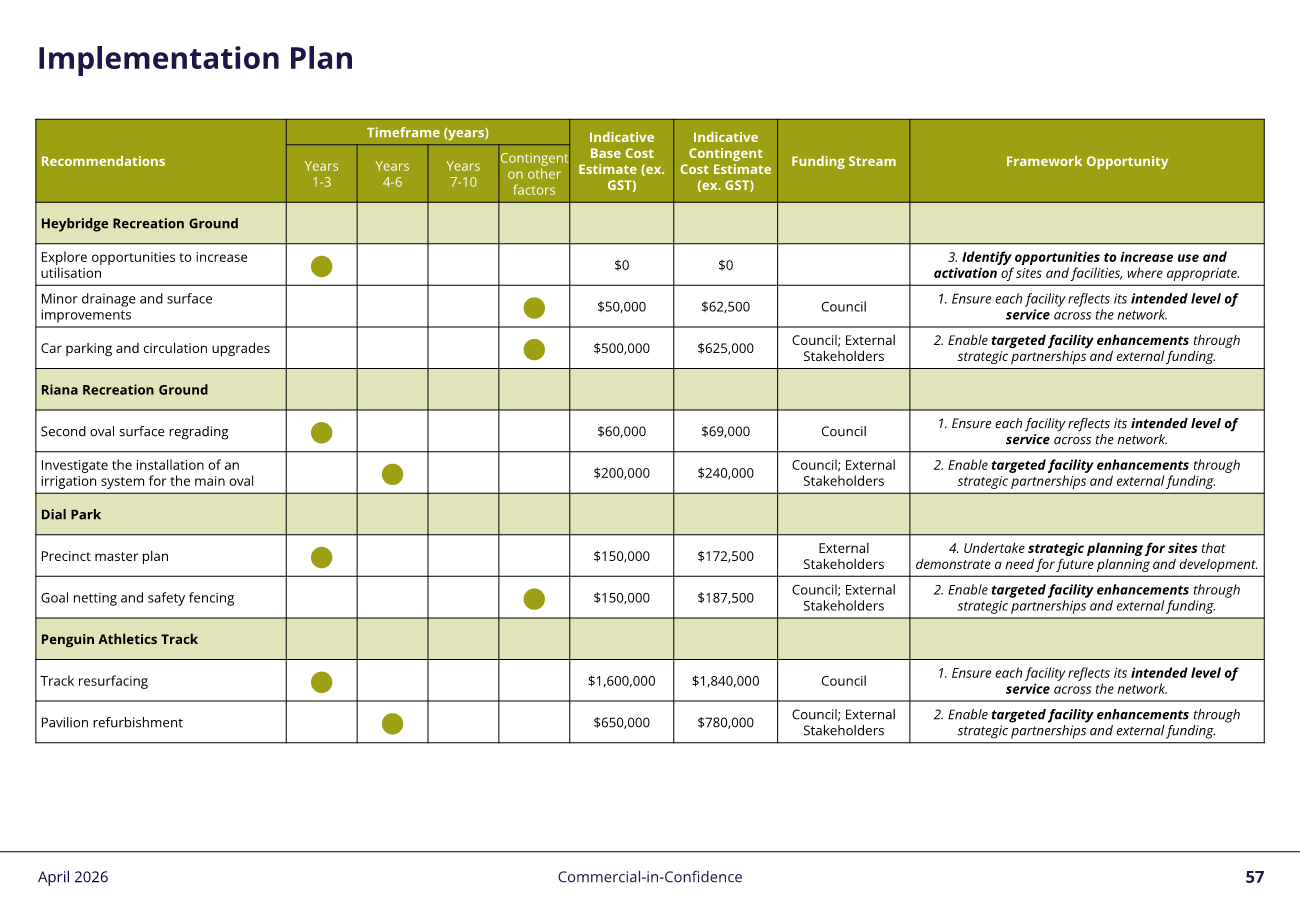
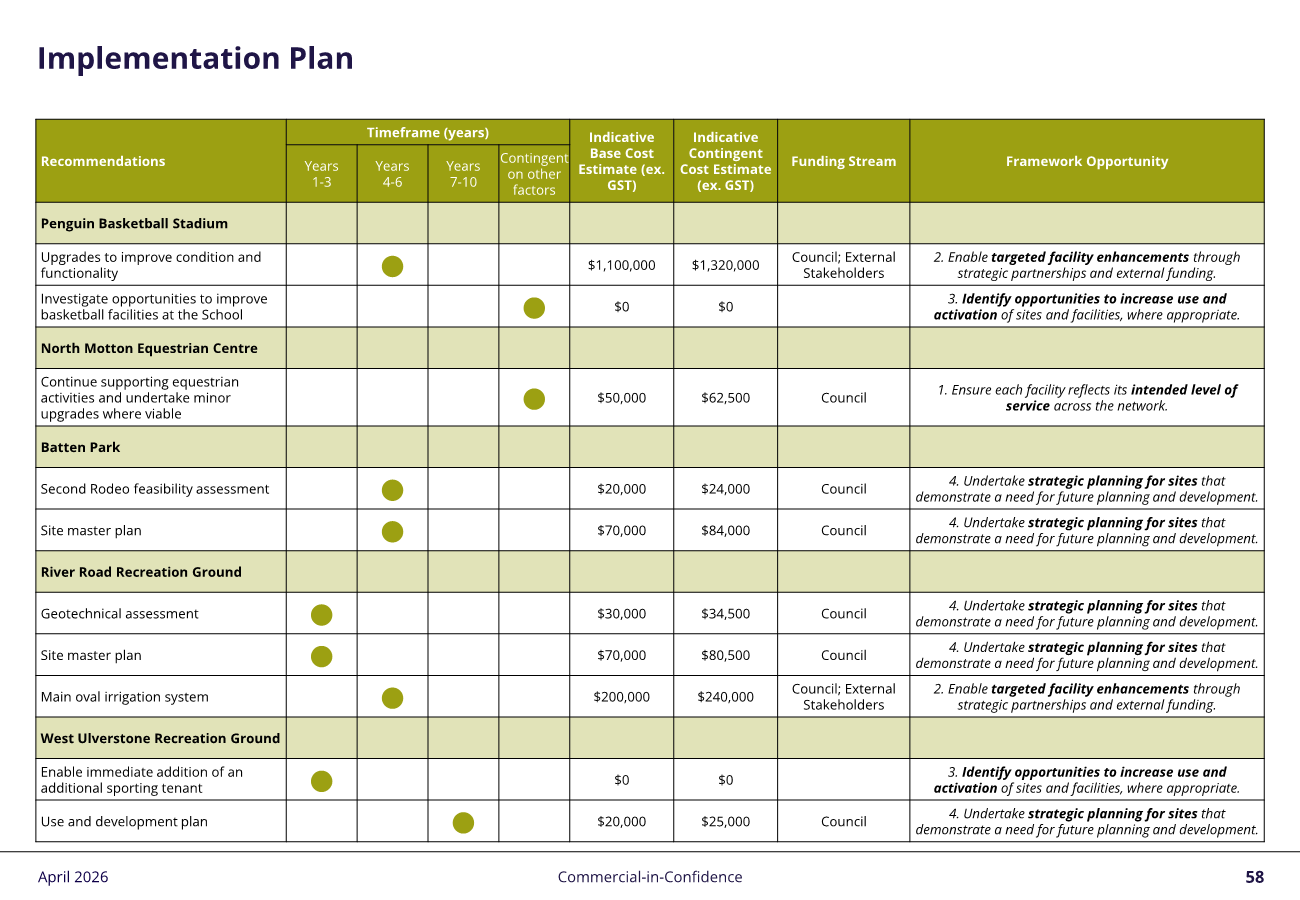
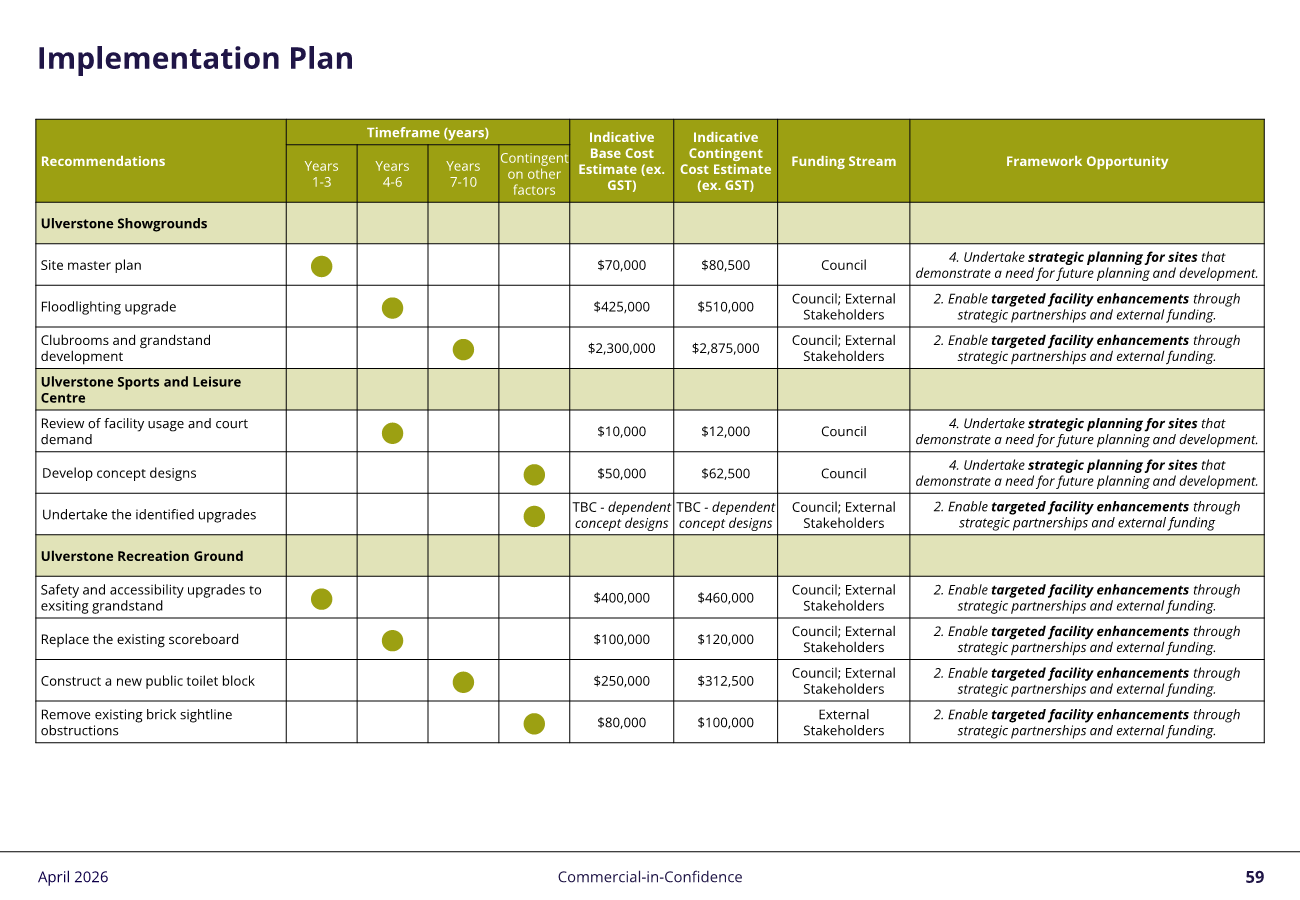
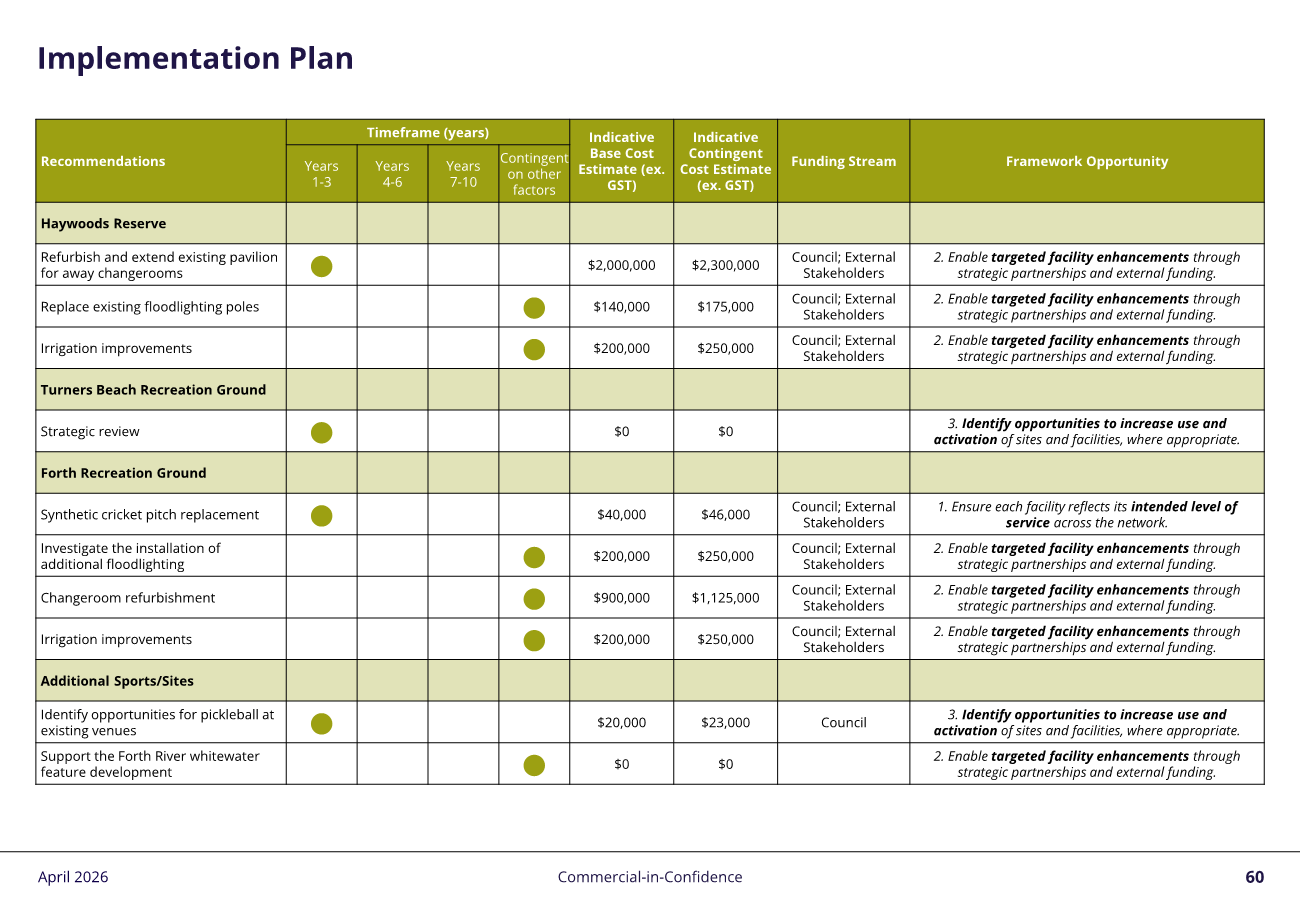
The draft plan includes a staged implementation plan outlining how recommendations may be delivered over time, grouped into short, medium and long-term actions.
Have your say
We’re asking the community to review the draft plan and share your feedback on whether it reflects what we’ve heard so far.
Your feedback will help us understand:
- whether you support the draft plan overall
- whether the recommendations reflect the issues raised during earlier consultation
- whether anything important has been missed
- whether priorities, staging or local impacts need further consideration
Consultation closes 17 May 2026.
Complete the online survey
Pick up a hard copy
Printed surveys and copies of the draft plan are available from Council's Ulverstone Administration Centre and the Penguin Service Centre.
Contact Council for support
If you need help to take part, Council staff can assist you to complete the survey over the phone.
Phone: 03 6429 8900
How your feedback will be used
Feedback from the community and sporting clubs will be considered alongside information such as participation trends, population change and the condition of existing facilities.
This combined evidence will inform the final version of the Sports Infrastructure Master Plan before it is presented to Council for consideration.
The final plan will guide future decisions about planning and investment. Any individual projects or funding commitments will be considered separately at a later time.
What we heard
Key issues and comments
In March 2026, Council worked with Solucio to better understand how sport and recreation facilities are used across the Central Coast, and what is needed into the future.
More than 25 local clubs, user groups and sporting organisations were consulted, alongside a community survey on My Central Coast which received 78 responses. This was supported by site visits, facility assessments and analysis of participation, usage and condition across the network.
Loading...
-
Current provision exceeds sustainable demand
“Clubs are often too proud to merge. Clubs have refused to merge in the past, only to be beaten heavily each week until there weren’t enough players left, and then fold.”
“There’s too many football (AFL) clubs, and something has to give for the sport to survive.”
“If the network were to start again, we probably shouldn't have as many clubs as we do now.”
“Sooner or later there will be an attrition of clubs. There are always whispers, particularly when a club struggles one season.”
-
Indoor courts don't meet demand
“Casual indoor basketball shooting access is highly restricted and generally unavailable outside programmed hours. There is no out-of-hours access system for this, meaning users must contact Council staff during office hours.”
“Whilst multi-lined indoor courts are designed to be multi-purpose, there can only ever be one sport being played on these courts, so as soon as a court is multi-lined for a sport other than ours, our access becomes limited.”
-
Resourcing constraints are impacting facilities
“Central Coast has too many grounds to look after, and because it is so large, some grounds seem to get a bit neglected. There is also not enough money to look after all the infrastructure, so this is on the Clubs – but many clubs are either small or struggling.”
“The difference between maintenance quality and frequency at grounds in Penguin and Ulverstone versus grounds in other suburbs is significant, despite us paying the same or similar charges.”
-
Club sustainability is shaped by governance
“You have to do the off-field things well. You need to have a plan with on-field and off-field goals, and a well-functioning committee that can split tasks into smaller tasks to get things done.”
“We pay rent as well as building insurance, ground maintenance, and utilities. We only have a handful of teams, so we have to bring in around $1,000 a week to stay viable.”
-
Participation is constrained by volunteer capacity
“The biggest consideration for clubs investing in juniors is volunteer capacity. If you start an under 12’s, then they become under 14’s and you still have under 12’s, and then under 16’s. Resources double and triple quickly.”
“One of the challenges faced at grassroots level is having to rely on community clubs to deliver entry-level and junior programs, not schools. There seems to be fewer Australian rules and cricket programs in schools, compared to (say) basketball, soccer and netball.”
Research and consultation insights
Alongside stakeholder feedback, broader analysis of participation, facility use and community trends was undertaken to better understand how the network is performing now and into the future.
This analysis shows that Central Coast has a diverse and well-used network of sport and recreation facilities. However, it also highlights a number of challenges that will need to be addressed to ensure the network remains sustainable and continues to meet community needs over time.